

Making it Count
//
Making it Count //
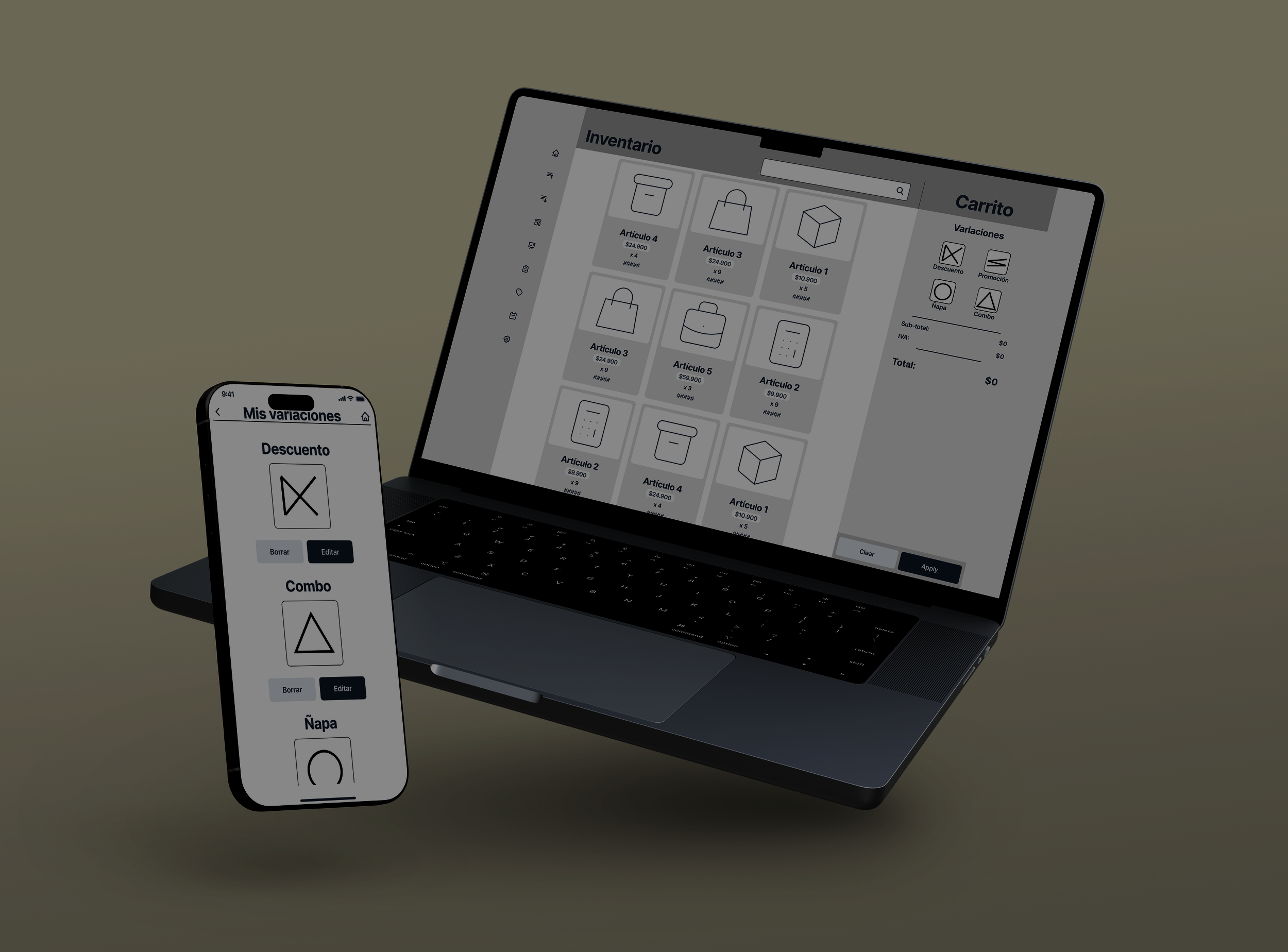
A UX project centered on the design of billing and inventory systems. Specifically, these systems are focused on the particular circumstances faced by entrepreneurs. The project seeks to understand what these particular circumstances are, determine how to intervene in their specific mechanics, and propose new functionalities in order to alleviate or resolve points of tension and/or frustration for the entrepreneur when using unconventional sales techniques, such as the colloquial "ñapa".
Time: 4 months
//
Team: Solo
//
College thesis
UX Research
UX Design
Prototyping
FIgma
My Role:
The Challenge
The initial scope of this project centered on developing a simple inventory system for conventional small businesses, such as neighborhood corner stores. However, early research necessitated a critical pivot toward a far more vulnerable user base: entrepreneurs. For micro and small enterprises, proper operations management is fundamentally a matter of survival. This urgency is statistically validated in regions like Latin America, where the two-year and five-year survival rate for SMEs is strikingly low, dramatically trailing that of other regions such as Europe. This disparity highlighted a significant, unmet need for accessible and effective operational tools designed for the entrepreneurial ecosystem.
Further investigation into their daily practices revealed that these entrepreneurs are highly agile, simultaneously engaging across three primary sales formats: e-commerce, physical locations, and temporary fairs. Their flexible, multi-channel operation often requires fluid and sometimes informal sales methods that traditional, rigid inventory and invoicing systems simply cannot accommodate. Methods such as haggling (regateo) and giving a little extra (ñapa) that are product of an intrinsic cultural background . This fundamental disconnect prevents them from gaining the essential operational clarity needed to stabilize and scale their ventures.
Which is why it was asked:
How might we design an inventory system that adjusts to the particular necessities of entrepreneurs?
The solution
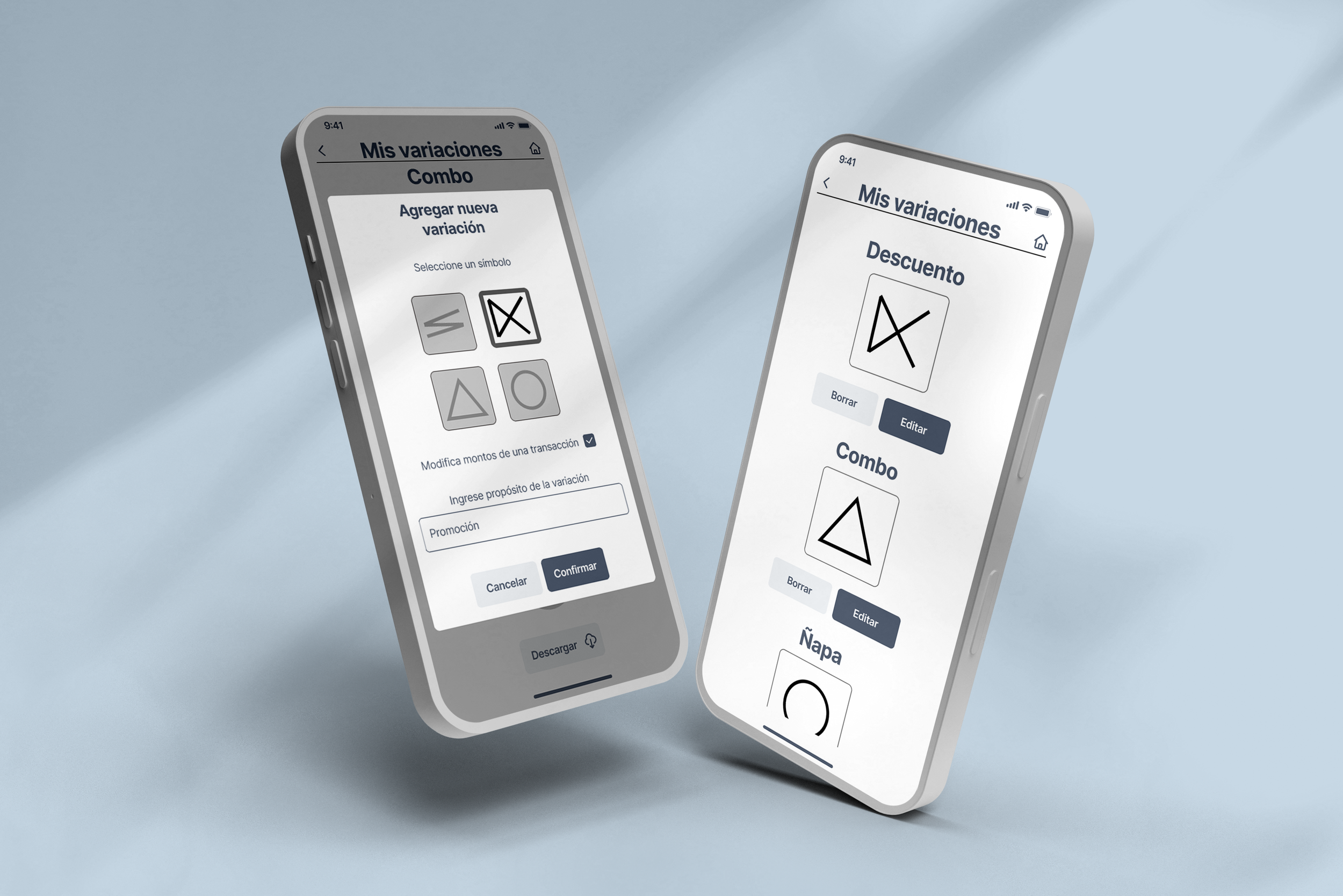
A series of new functionalities to be added to any inventory system that help entrepreneurs understand the effects of their unconventional sales methods by accepting and adapting rather than displacing said unconventional methods, so that they can make decisions that improve the chances of success for their business and guarantee its survival.
Research
Competitive audit
Fly on the wall
Semi-structured interviews
User flow
Competitive audit
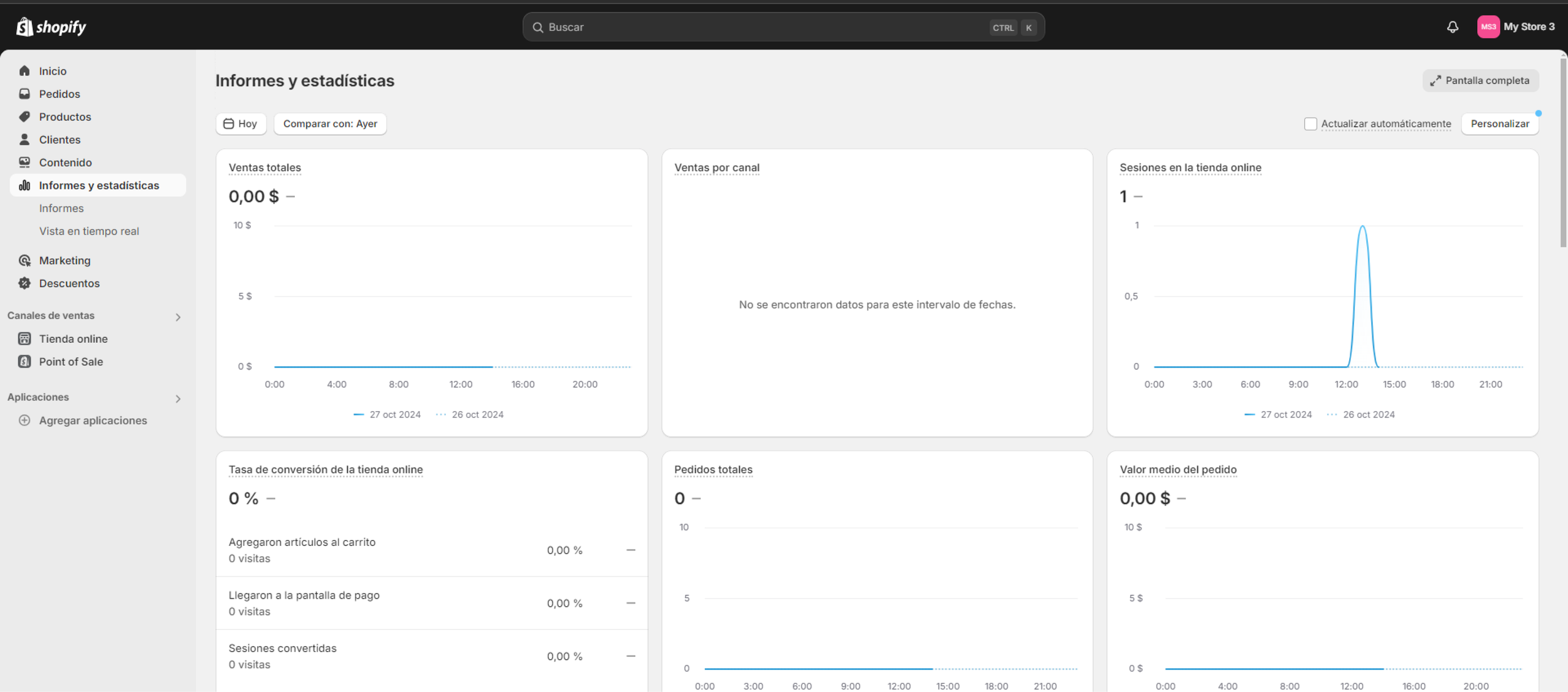
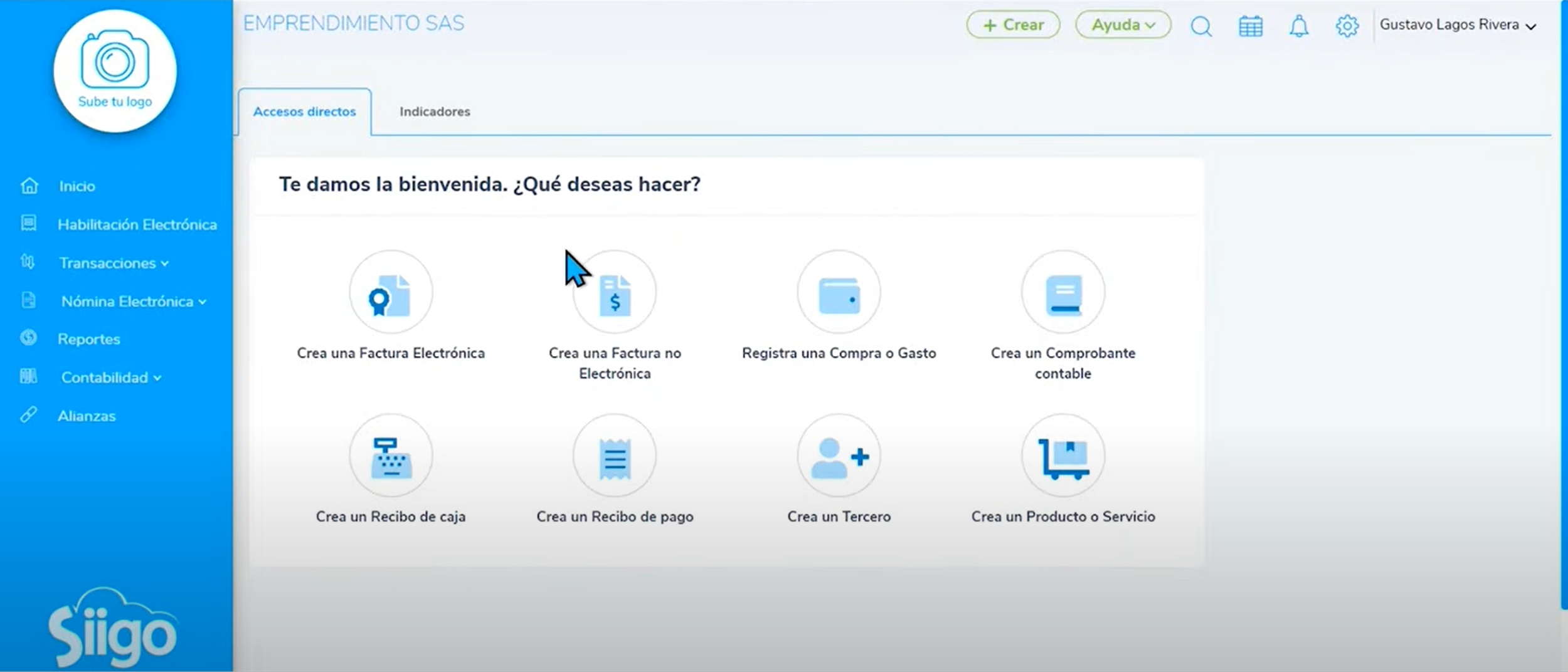
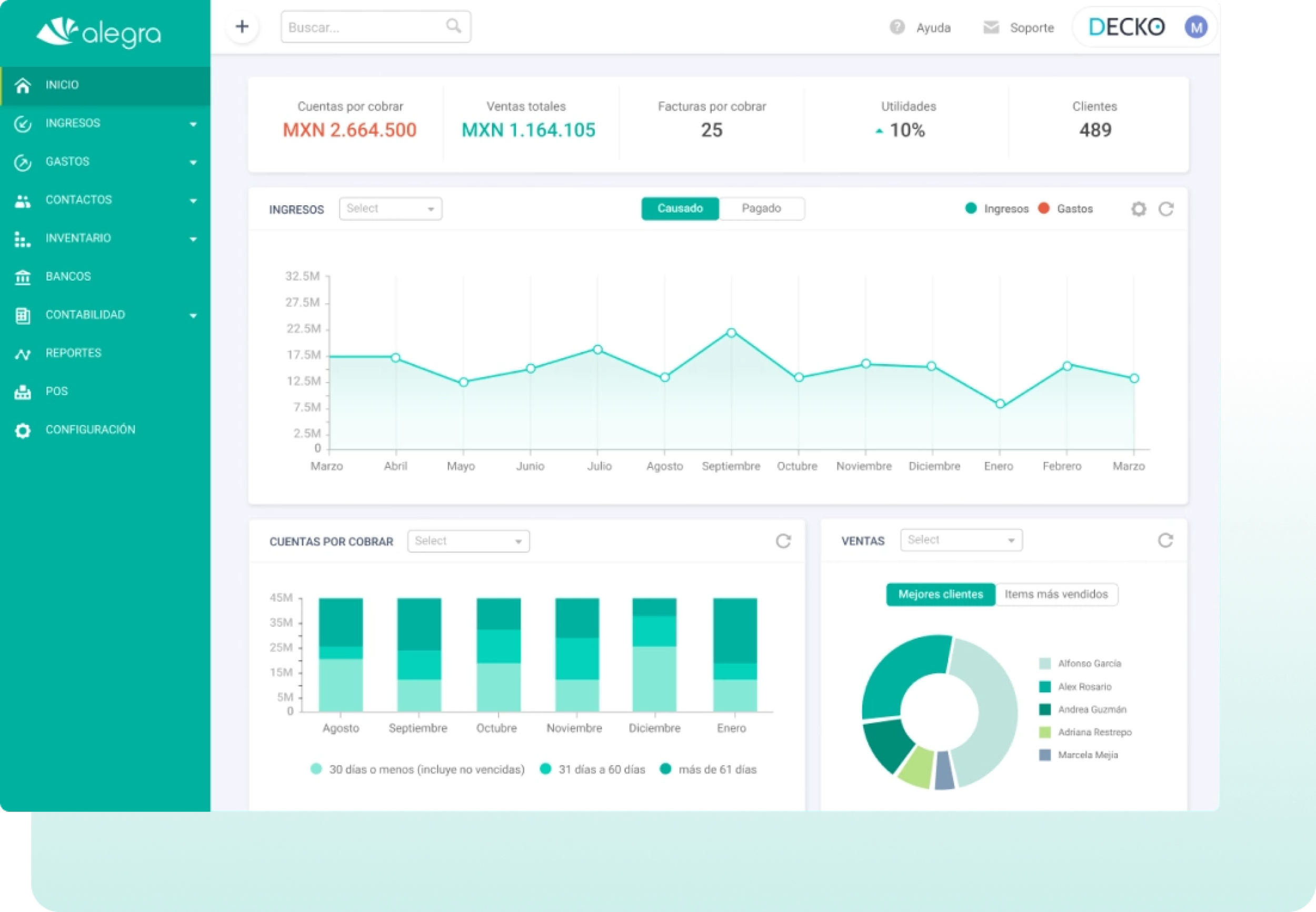
11 different systems were evaluated.
It was concluded from the audit that inventory systems are not exclusive to that function. They are usually invoicing systems WITH inventory management functionalities.
Fly on the wall
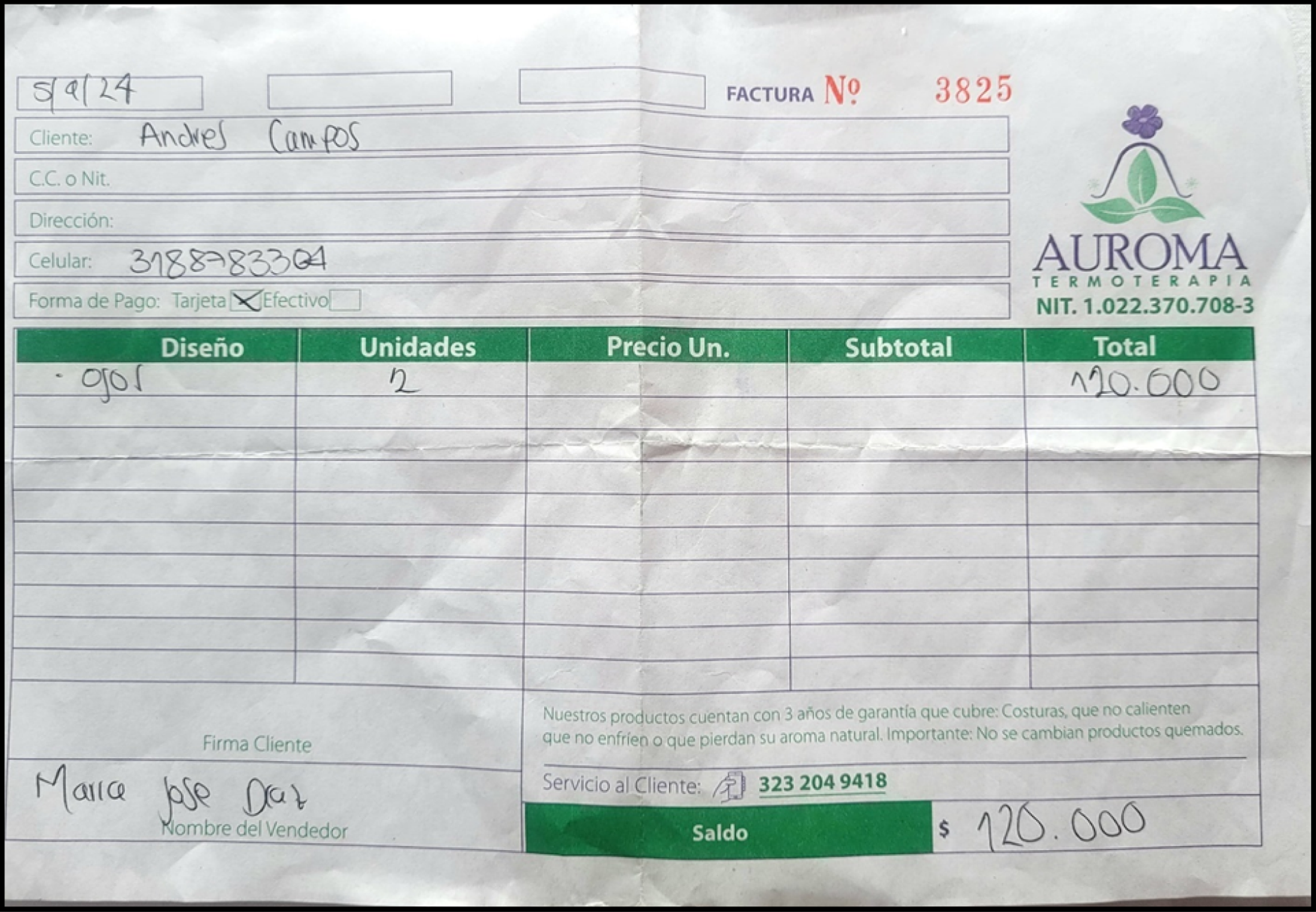
Entrepreneur fairs were visited throughout the investigation process, during which a ¨fly on the wall¨ approach was implemented, where entrepreneurs were observed while completing their routines and approached potential and repeating clients without the researcher’s input or intervention
During entrepreneurship fairs, there are moments leveraged by entrepreneurs to generate sales opportunities, which are recorded in an analog manner without following an established format.
Semi-structured interviews
One of the most time-consuming moments for the business is taking inventory. This is even more true for niche merchandise, as it requires abandoning the system in favor of a manual, item-by-item review.
One of the most time-consuming moments for the business is taking inventory. This is even more true for niche merchandise, as it requires abandoning the system in favor of a manual, item-by-item review.
User Flow
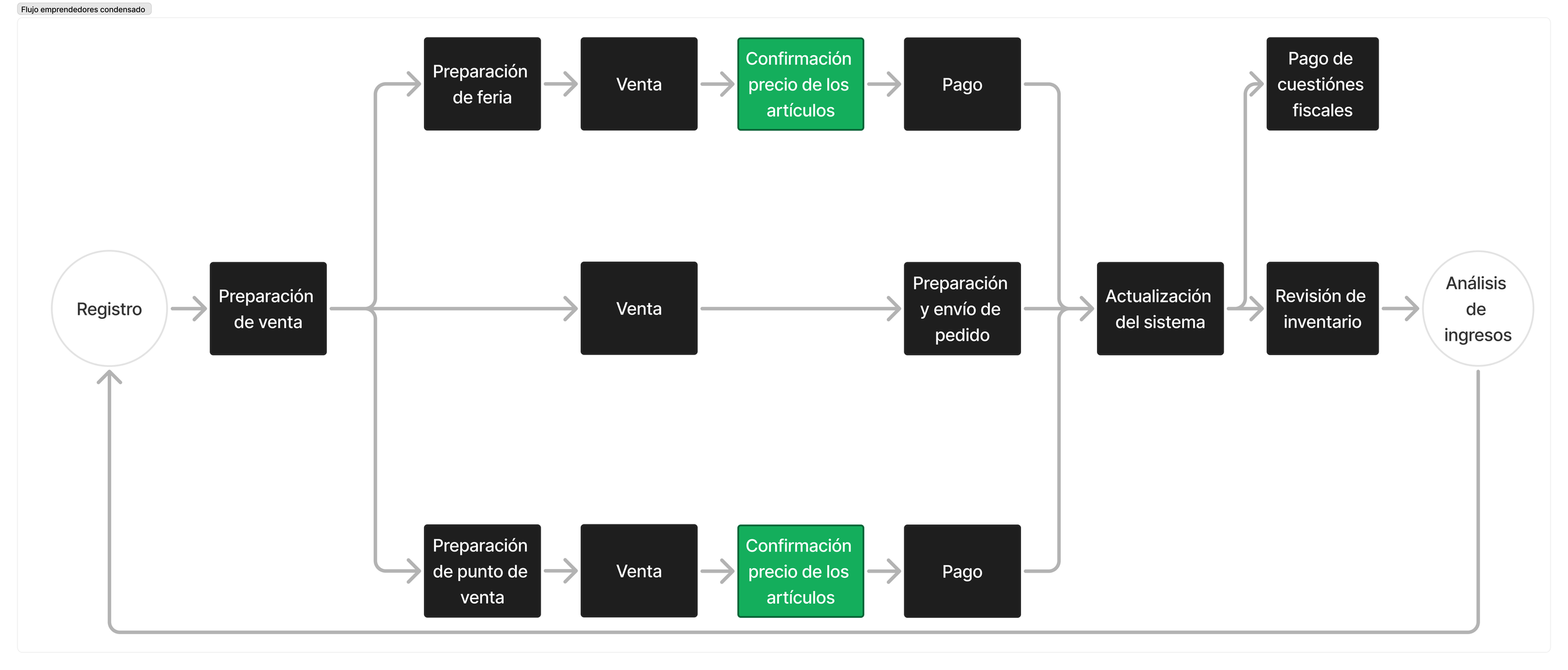
There is a point of great importance when defining the price of the items since it represents the moment where the various informal sales mechanisms are used and implemented.
User Personas
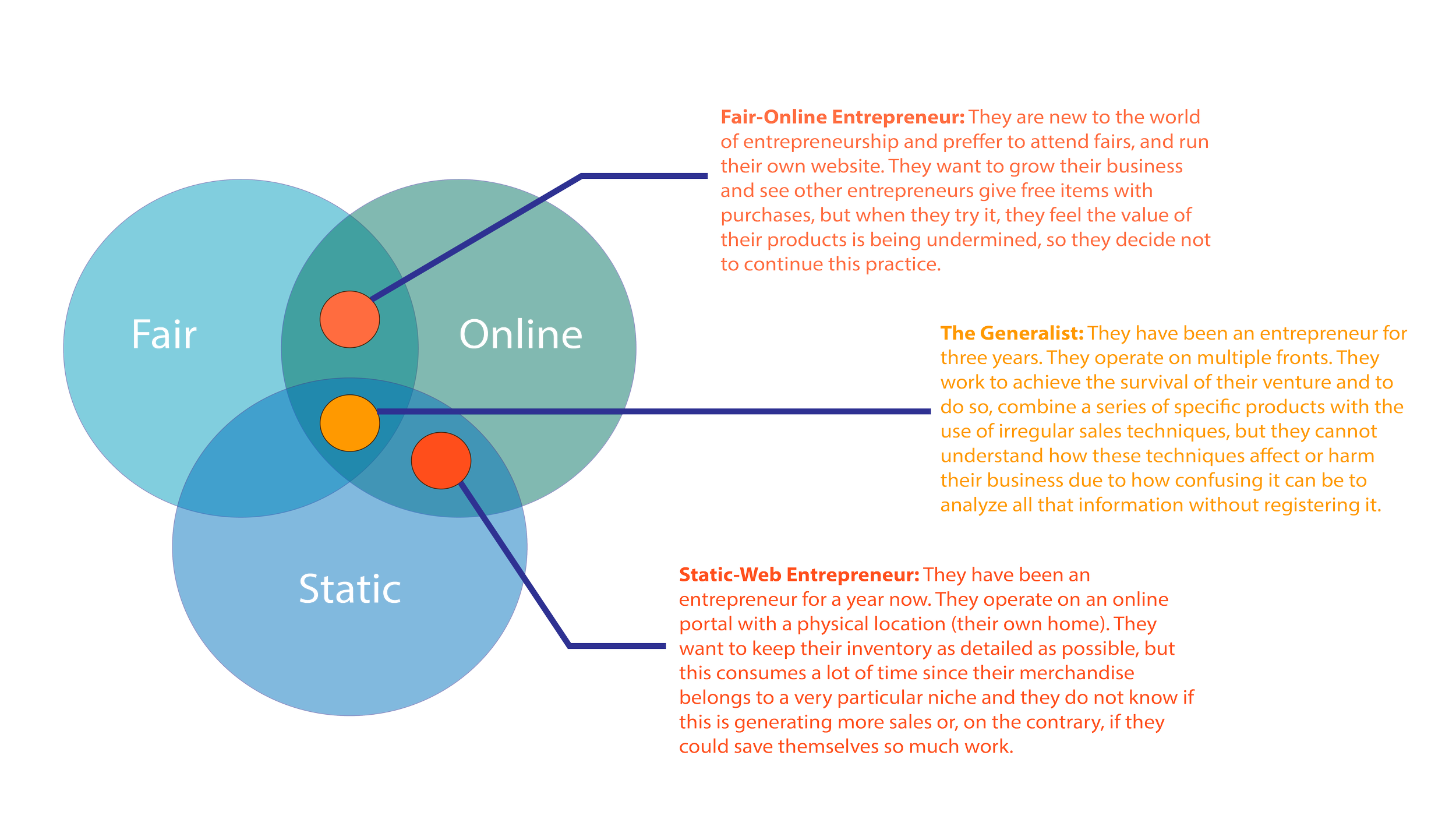
Thanks to the aforementioned research tools and conclusions, it was identified that the entrepreneurial user base is inherently flexible and non-static, navigating concurrently across three distinct sales formats: virtual portals, dedicated physical locations, and high-visibility temporary fairs. However, the research also concluded that most entrepreneurs exist at an intersection of these three operating styles, thus, three core user personas were strategically defined.

Insight
The decisions entrepreneurs make regarding the operation of the business are generally in favor of the short term, as these decisions are crucial for the survival of the venture.
However, these decisions generate impacts on the business's accounting, organization, and regular operation, which are not perceived by the entrepreneurs. This can ultimately put the business at risk in the medium and long term.
Prototyping
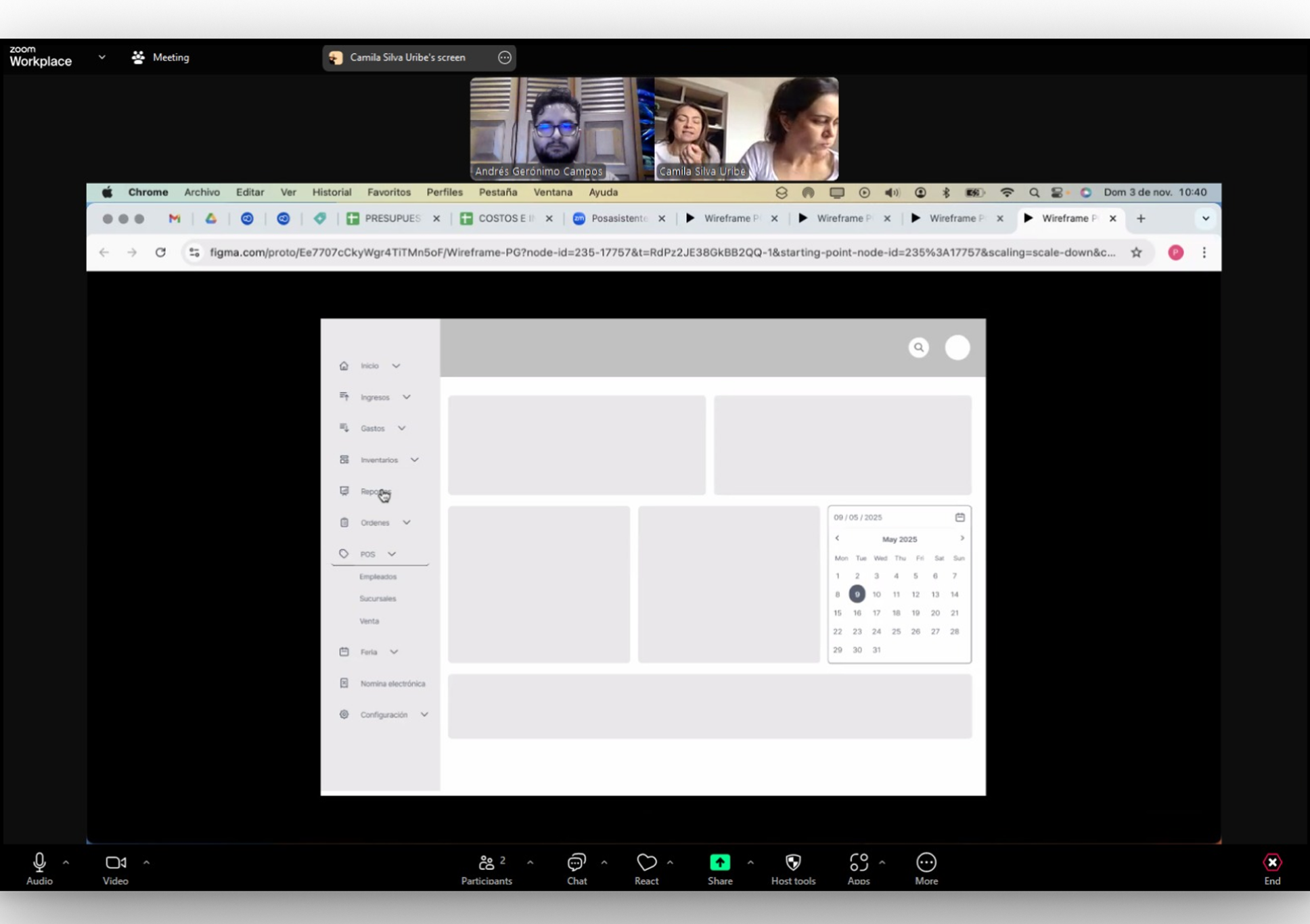
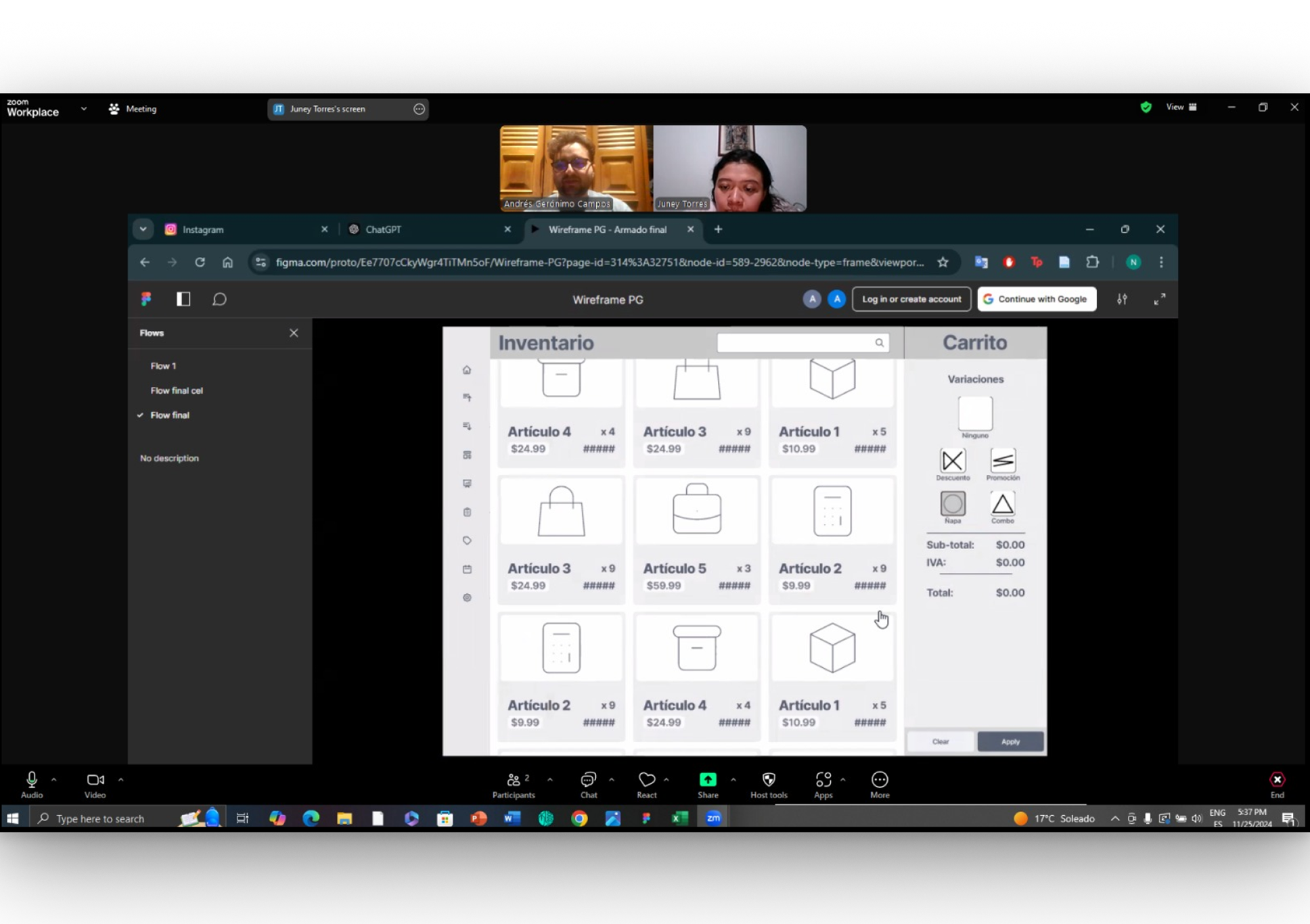
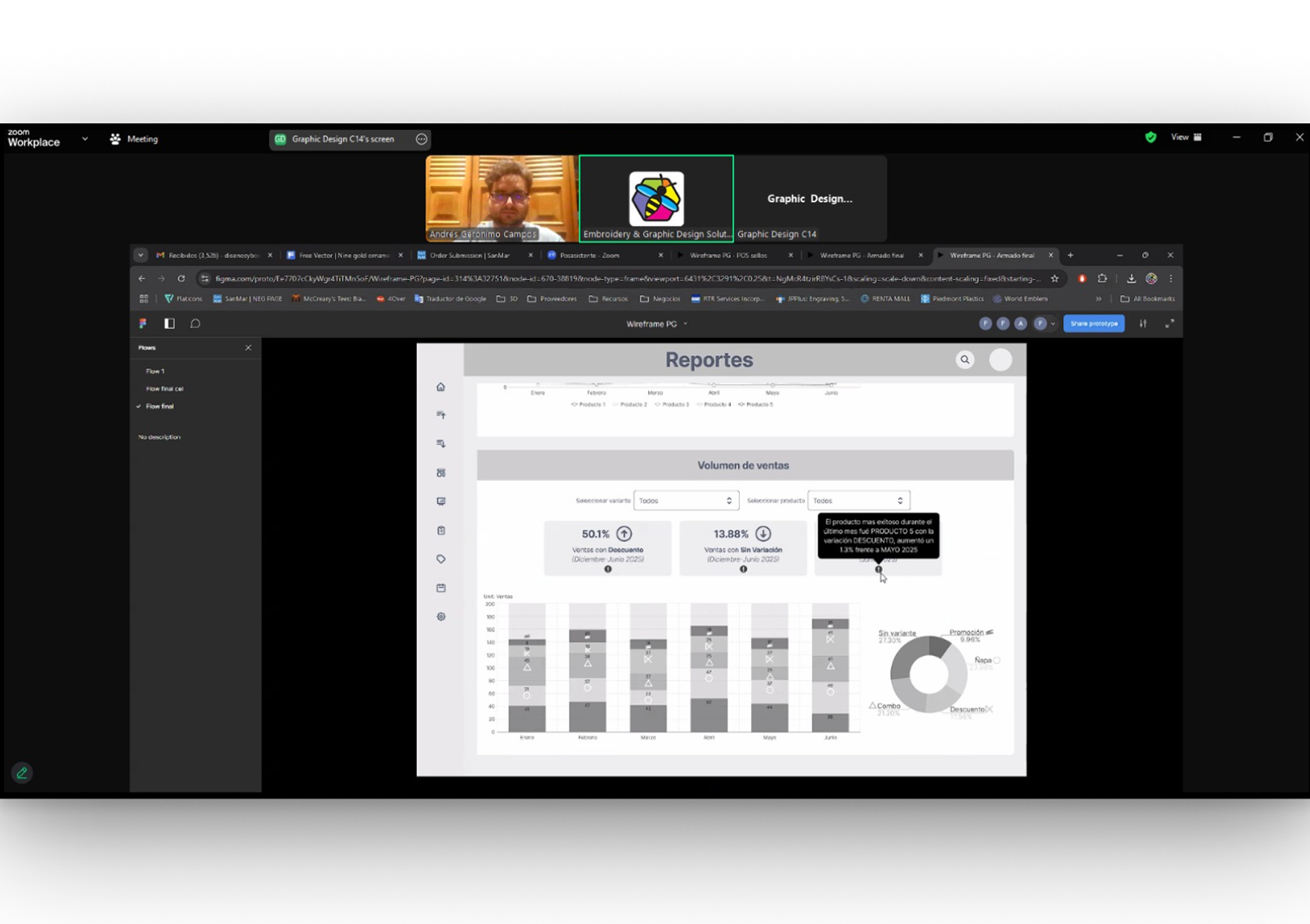
Three rounds of prototyping were done with the purpose of testing and refining the functionalities of the prototype. Each round was held with five participants via separate zoom calls where each participant interacted with the current prototype while trying to complete a determined flow. Once the flow was completed, the participant gave their respective feedback and opinions regarding the current state of the wireframes.
The feedback would then be implemented into the next prototype to be tested in the final round before the final prototype wireframe is refined and presented.

The symbols
Phone functions
Point of Sale
Data analysis
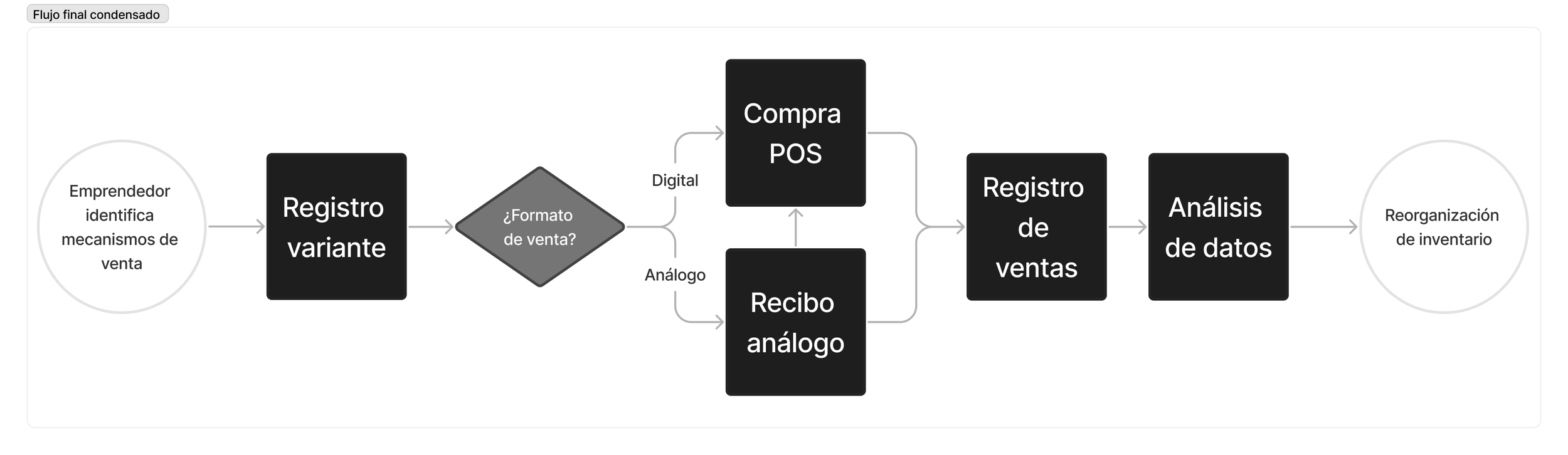
Final User Flow
This user flow reflects in a condensed manner how the final prototype would be used by an entrepreneur when interacting with its usual POS system while engaging clients and finalizing a sale.
If you want to see the full flow, feel free to check the case study document below.
Final Designs
Phone experience
Add and edit existing sales variants so the user can keep track via the POS system how they complete a sale.
Point of Sale
Register sales as well as the techniques used, showing in real time the effect on the final price in order to issue a proper receipt.
Data Analysis
Keep trackof your business and gain further insight into how different techniques are affecting each sale, as well as understanding how different techniques synergize with each item.
Want to know more about this project?
Feel free to check any of the following links: